Sunday, March 18, 2012

Working Conditions in the Industrial Revolution


When somebody utters the words, "Industrial Revolution", these are the types of images that people tend to conjure up. Young, poor, helpless kids wearing rags and working for hours upon hours for mere pennies a day. With almost no breaks. Bad food. Stuffy. Depressing. Hot. Cold. Whatever. No matter what the exact image is, I think we can agree on this: it's generally not a good one.

To be honest, this is my very first post on the junior theme, and I haven't done anything more than glance at a few pages of a book I checked out at the library. But before we embark on this exciting expedition through the nineteenth century together, I'd like to make a note on one thing.

As I mentioned in the first paragraph, people automatically get the impression that the Industrial Revolution was all bad. But as I was sitting here and thinking about it myself, I realized one crucial piece of information: the transition from agriculture-based jobs to manufacturing plants and factories was made completely and absolutely voluntarily. In other words, people chose a lifestyle of tedious, factory labor on their own. Had they wanted to, they could have kept things as they were. And they didn't.

The only reason I'm putting that out there is because I feel like people tend to accept the faulty notion that people were sitting in circles singing kumbaya all day long before the 1800s, and then as soon as the evil, selfish entrepreneurs arrived, everything went bad. Well, let me tell you, no matter how you feel about what transpired during the 1800s, it simply didn't happen that way. In fact, people were very poor beforehand. Starvation was a very real threat at the time. And some would argue that the voluntary shift into the Industrial Revolution is what got us through those horrific times when people were always hungry. I'm not necessarily saying everything that occurred during that time was acceptable, but I'm just making the point that it was a voluntary transition that took people from a bad time through a journey to where we are today.

Well, those are some of my thoughts on the Industrial Revolution and the junior theme in general. Feel free to comment. What do you think?


Sunday, March 11, 2012

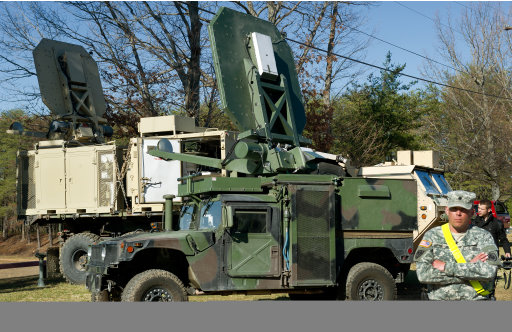
The Military's New Heat Ray Weapon: On Second Thought...

While sifting through the news today, I came across an article that I found to be particularly interesting. It detailed the US Military's new mass containment weapon that uses an electromagnetic beam that, although not harmful, causes people to get a fleeing reaction and run in the opposite direction.

Upon first thought, I did what just about any other reader would do. Cool! I thought to myself. What a neat piece of weaponry!


However, on second thought, I became far less enthusiastic. I began thinking of the implications of something so powerful - so mighty, that the press of a button could send thousands of people fleeing from something they couldn't even see, smell, or hear. 

In the same way that I was concerned when the US government authorized police units in the use of drones here at home (as you can read about here), I don't feel comfortable with anybody being in possession of a weapon like this. What does it mean for a society when the ruling class has almost every weapon conceivable at their disposal? Why are we so willing to defend the further development of weapons like these, never once suspecting they could be used against Americans themselves?

I feel that as a society, we have lost our way in the sense that when it comes to the military industrial complex (remember from our discussion in class?), Americans are unwilling to question government. It seems as if every year the United States blows hundreds of billions of dollars on bigger and better military equipment, but at what cost? Does anybody really believe that we're going to need these things? We already spend more on the military than all of the other countries put together. Is there anybody out there who actually poses such a serious threat to the United States?

In my research of this matter, I watched this video of President Eisenhower warning the American people about the military industrial complex in his farewell address. As he so eloquently stated. "We must guard against the acquisition of unwarranted influence, whether sought or unsought, by the military industrial complex.The potential for the disastrous rise of misplaced power exists, and will persist. We must never let the weight  of this combination endanger our liberties or democratic processes." The president himself acknowledged the potential for "misplaced power" - quite possibly the lobbying power that we see today from massive US military contractors. The exact kind of lobbying power that was most likely responsible for the building of this heat ray weapon.

If you ask me, I say we must take Eisenhower's advice and begin to question the military industrial complex once and for all. And that means that even if the government tries convincing you that some gizmo will only be used against your enemies, you remain suspicious and questioning. It's time to get the United States military machine under control.

What do you think? In the midst of our tremendous debt, should the government still be financing military projects like these?


Sunday, March 4, 2012

TV Tokenism: Alcatraz


"Alcatraz" seems to have an incredibly small amount of diversity in its cast. Except for Doctor Lucille, all of the actors are white, and the vast majority are men. Generally, I believe that this show does fit the criteria for TV tokenism. The main character, Rebecca Madsen (center), is always the center of the storyline, complex, white, and receives the bulk of the screen time. She has several supporting characters, like Dr. Soto (center left), Emerson Hauser (center right), and the European, female doctor, Doctor Lucille (far right). After getting shot in the beginning episodes, Lucille hasn't played any serious role, but she had previously been in the "buddy" position and participated in the subplots. The one area where this show diverges from the framework of TV Tokenism is that Doctor Lucille actually has a fairly complicated role with a significant amount of mystery surrounding her past.

Answer to Jon S. Post on "Acceptance Without Justification"


Jon - I find it very ironic how in your argument for the need of societal focus, you bring up how people shouldn't be allowed to steal from one another. You just proved my point. The purpose of government is to prevent individuals from taking away each other's rights. As you said yourself, the same concept applies to economics. This means that the government should be there to prevent theft, and as I showed in my previous comment, wealth redistribution is a forceful transfer of wealth, or in other words, theft.

The big problem that I constantly see in progressives is that they equate our current system with free market capitalism. Especially in healthcare, nothing could be further from the truth. Our healthcare system resembles corporatism, with government intervention all over the place. The biggest reason for the high costs is that due to tax incentives, health insurance is purchased through businesses, and due to this third party payment system (which is barreled with regulation after regulation), there is very little incentive for cost reduction by doctors, hospitals, clinics, etc. This is what causes high prices. I'd be happy to give you more information on this if you ask. But at the very least, you have to recognize that although we have a very flawed healthcare system, it isn't because of capitalism, and if you look at the healthcare systems in Canada and the European countries, you'll find that they're nothing to brag about. Typically, they have long waiting lines, rationing, mediocre quality of care, and high taxes.

For the record, I don't believe in public schools. An excellent case can be made for this, and the fact that you pointed to the poor quality of education in other areas in America is indicative of what I'm saying - government involvement in schools hasn't worked, and throwing more dollars at a failed endeavor certainly won't make the problem go away. Keep in mind that the Department of Education has been steadily getting more and more money over the years, and there hasn't been any progress - just more mandates and regulations in a top-down system that clearly doesn't work.

Once again, for the record, I don't like Mitt Romney.

In a capitalist system, EVERYBODY benefits. I've explained it in depth already, and although I know that you love saying things like "the ones that survive are the ones with the most money", you haven't addressed my argument one bit. Please, stop repeating progressive slogans and tell me HOW only rich people benefit under capitalism. The collapse of 2008 is not a valid example of free market failure - when you've got artificially low interest rates from the Federal Reserve coupled with affirmative action programs, tax incentives, and programs for easy loans, you can't blame the free market. Keep in mind that it were the Austrian Economists who saw the crash coming from a mile away. I've told you my theoretical argument and my empirical evidence for this, now I challenge you to do the same.

When the founding fathers warned us of mob rule, you're right, they warned us against rules that could be instated to favor classes. That means that if the 99% says it's OK to take everything from the 1%, they shouldn't be allowed to do it. That's what the founders warned us about, and that's why they made this country a republic - to prevent the exact kind of action that you are advocating for.

It's a good thing that the private sector wants to make money. They have the profit incentive that the government doesn't. That means that if they aren't able to attract workers through decent wages and working conditions and coordinate their resources effectively, they go out of business. That's what drives businesses to create cheap products and pay their workers based on their productive capacity.

What's really fictitious is that only government can create the technology necessary for the private sector to work. What evidence do you have that ONLY government can accomplish this? I understand that the government has played a role in aiding the private sector, but the free market would be able to accomplish that remarkably, and with better results (remember the profit incentive?).

What I find absurd is that even though I showed how the poverty rate has stagnated since the introduction of the War on Poverty, you're advocating for more of the same! Keep in mind:
"Insanity is doing the same thing over and over again and expecting a different result."
-Albert Einstein

Now, I never made the claim that the Great Depression was an example of the free market in action. The ABSENCE of the free market is what prolonged it for over fifteen years. Interesting how every time I bring up the Federal Reserve, you never address it! Blaming depressions on greed is like blaming airplane crashes on gravity. But when you've got the Federal Reserve flooding the financial system with credit, is it any surprise that malinvestment occurs? Please, if you're going to claim that all recessions/depressions are caused by unregulated greed, explain to me how the Federal Reserve is not responsible when it's creating money out of thin air and flooding the economy with credit.

At the very least, I'm glad you acknowledged that taxes are theft. The problem is that theft is wrong. And maybe if you did a little more research on the free market and took a look at Austrian Economics, you'd realize that the absurd amount of taxes we have today are not necessary and frankly, destructive to a free society.

Friday, March 2, 2012

TV Tokenism: It's Here, But What Should We Do About It?

Following our recent classroom discussions on TV Tokenism, I've become convinced: it definitely exists. In fact, not only does it exist, but it has penetrated so far into the root of our society that I'd be amazed if anything changed on this front in the coming years. But as I think about it, the question arises: now that we know, what should be done about it?


To answer the question in one word, nothing. I mean, at least at the government level. 

Since the founding of this country, our society has been built upon freedom. That means we have the freedom to eat what we want. And the freedom to talk as we want. And along with that, it means that as a society, we have a right to create whatever TV shows we may want. Sure, the main reason for TV Tokenism is the incentive to make money, and most show do in fact perpetrate TV Tokenism. But there will always certain shows that are intentionally created to appeal to the minorities. And if we want to live in a free society, we have to learn to embrace other people's freedom to make TV shows as they please.

If we do want to create a change in the system though, there is nothing wrong with boycotting certain shows, spreading the word, writing letters, emails, etc. The main reason why people perpetrate TV Tokenism is because they think that it will earn them the most amount of money. But if we show them otherwise, trust me: they will make a change. If enough people put in the effort and protest TV Tokenism, I have no doubt that we will be successful.

What do you think? Should anything be done on the government front or not?

Answer to Jon's Blog Post, "Acceptance Without Justification"

Note: this comment turned out to be too long for the comment section, so I decided to make it a post. This might not be very interesting to most people out there, but in the midst of so much capitalism bashing I decided to present the other side.


Here it is.


Jon - it seems as if you place emphasis on the value of society as opposed to the value of individual people. My question is, are you willing to sacrifice the natural rights of the people living within the society for your cause? Because that's exactly what you're proposing with wealth redistribution, where the government extracts money from certain individuals through the use of force and gives it to others. See, if an armed man came to your house, put a gun to your head, and took your money, that would be wrong. But what makes it morally justified when the government does it? Remember, this is what the founders warned us about in a democracy - it is often nothing more than mob rule.

Also, you don't think people in the private sector work for a common goal? Just take a look at some of the incredible entrepreneurship that we have witnessed in our society. In some cases, literally millions of people work for the common goal. The only difference is that the private sector has a profit incentive, which in turn causes them to create the best product for the cheapest price, while politicians will sell their soul just to get re-elected into office again and again.

I find your assumption astonishing that under a free market system people would be paid five cents an hour. In that case, why isn't everybody paid the minimum wage right now? What's stopping employers? There's a reason they don't do that. I don't want to get too technical but it makes perfect sense - if an employer pays an employee below what they deserve based on their productive capacity, the employees will flock some other place where they are valued according to their productive capacity. In other words, wage competition occurs.

To give you an example of how the free market benefits everybody, look around. Two hundred years ago, poor people faced a very short life expectancy, starvation, backbreaking labor, poor transportation, poor housing, etc. On the other hand, rich people worked little, had servants, and led a more luxurious lifestyle. Nobody had adequate transportation. Now, the difference between a poor person and a rich person is that a poor person has a beat up car, while a rich person has a new BMW. But they both have cars! Although wealth disparity exists, EVERYONE has become wealthier and enjoys a higher standard of living.

About the 1900s, you're right (and I did acknowledge this with the word "virtually") - there was a small amount of poorly funded programs. To be honest, I don't know the exact specifics. But remember, the War on Poverty began in the mid-late 1960s along with massive, leviathan programs like medicaid. Is it really just a coincidence that since these enormous government programs were put into place, the poverty rate has stagnated? Hardly.

Now, in terms of the New Deal, I always find it laughable when people bring it up as an example of exceptional government action. Remember, the Great Depression lasted for a whopping 15+ years (not officially, but I can give you further evidence of this if you'd like). Have you ever heard of the depression in 1920? That's because although the GDP plummeted and the economy was headed for the doldrums, government did nothing, and the free market fixed itself.

Thursday, March 1, 2012

TV Tokenism: Alcatraz

"Alcatraz" seems to have an incredibly small amount of diversity in its cast. Except for Doctor Lucille, all of the actors are white, and the vast majority are men. Generally, I believe that this show does fit the criteria for TV tokenism. The main character, Rebecca Madsen (center), is always the center of the storyline, complex, white, and receives the bulk of the screen time. She has several supporting characters, like Dr. Soto (center left), Emerson Hauser (center right), and the European, female doctor, Doctor Lucille (far right). After getting shot in the beginning episodes, Lucille hasn't played any serious role, but she had previously been in the "buddy" position and participated in the subplots. The one area where this show diverges from the framework of TV Tokenism is that Doctor Lucille actually has a fairly complicated role with a significant amount of mystery surrounding her past.