I'll be honest here, it took me about 20 minutes before I could settle on my favorite blog post. The reason? All my blog posts are too good to choose from.
But seriously, I wanted to see how well I related my writing to American themes, along with some of the topics we've talked about in class. After some mind-straining consideration, I settled on my most recent one. You can take a look here.
I think the best thing about this post is how well I was able to integrate the themes we've discussed this year. I was able to convey the significance of entering politics as a minority. I questioned the American political machine, and the way it takes advantage of people to further its grasp in the political system. And to top it off, I connected it to our discussions about token minority characters. It's pretty obvious; Mia Love - the black, female, republican, Mormon running for a congressional spot in Utah - might as well be from a TV show.
In addition, I think the overarching idea behind my post was quite inquisitive. It magnified the extent to which people in the political discourse are willing to go for empowerment. When it came to Mia Love, the republican establishment didn't hesitate to jump on something so opportunistic. Even with months to go until the elections, she was place on the top ten list of most important congressional races. And high profile members of the GOP have already gone so far as to state that she would have millions of dollars at her disposal. This reflects the nature of politics, the depravity (I would go so far as to say) that haunts politics in America. And to my great satisfaction, I'm confident I conveyed this message accurately.
Overall, I'm convinced that my writing has grown over the year. I learned to better convey messages, tie in outside sources, reflect on themes from class, and question common thought. In my opinion, my blog post about Mia Love demonstrates this improvement.
Wednesday, May 30, 2012

Tuesday, May 22, 2012
Race, Gender, and Politics
As I was sifting through the daily news stories, I encountered one that I found really tantalizing (link). The GOP political machine is endorsing a candidate for a congressional race in Utah, but not just any republican contender - a black, female, self-proclaimed Mormon. And the more I thought about it, the more I realized how much it related to some of the themes we've discussed this year: race, gender, religion, token minority characters, etc.

It's not something that's often seen in the political arena these days. In fact, if she gets elected, Mia Love would be the first black woman to serve in the US house of representatives. That being the case, it should come as no surprise that the Mia Love is in the cross hairs of the republican establishment, being declared one of the top ten most important races in 2012. The GOP has had a long history of not welcoming minorities with open arms, and as anyone could guess this was a scarce opportunity.
So here's the plan. Spend lavishly in the election, and create the perfect token minority character. Fool the people into believing that republicans have the same appeal to minorities as the democrats. Build the party where it matters most and construct an image of diversity, while simultaneously pandering to a crucial voting block. And the next time some democrat utters the word "racist", you've got the perfect comeback: Mia Love.
There is no denying this. In fact, when asked about this inconvenient truth, Love replied very cryptically, and resorted to the usual political shenanigans: "It's not because of a pair of heels that I was able to go in, and cut spending" she replied, trying to maintain a smile. What does that even mean? Please answer the question, Mia Love.
In 2008, the republicans got eviscerated when it came to galvanizing key demographics. According to this breakdown, a staggering 95% of blacks voted for Obama, while 56% of women voted for Obama. So in the same way that TV shows use token minority characters for higher viewership ratings, Mia Love couldn't be a better candidate to get republican minority engagement up. Throw the people a bone to chew on. That's certainly what appears to be happening.
But really, this isn't even the real problem. The problem is that politics continues to be one cat fight after another. The problem is that the two parties are so desperate for votes that they would go to any extremes to successfully pander to the right demographic. The problem is that Americans still care about race and gender. The fact that the republican establishment cares so much about this election indicates that as much of a facade as this is, people pay attention to these attributes. Believe it or not, a black, female, Mormon standing at the forefront of the GOP could actually play an imperative role in garnering votes.
Sunday, May 13, 2012
College: The Ultimate Indication of Class
I'm going to be honest here: I've been completely apathetic to the very thought of college for many years. Although my parents had been encouraging me to show the slightest bit of interest, I wouldn't budge. And to make matters worse, the meetings with my college counselor had virtually no effect on me. But finally, something clicked in my brain over the weekend. For hours, I sat at the computer surfing through website after website, looking for a college that would be right for me.
The funny thing is that I couldn't think of anything to write about for my blog post. And then it hit me. COLLEGE. After everything I had read over the weekend, I had subconsciously accepted the notion that college would act as a social marker in my life. I could be in the "elitist", upper class. Or the average, relatively mediocre middle class. Or I might not go to college at all, and find myself in the lower class. The place I go would very likely define my social class for the rest of my life. Scary thought, isn't it?


The funny thing is that I couldn't think of anything to write about for my blog post. And then it hit me. COLLEGE. After everything I had read over the weekend, I had subconsciously accepted the notion that college would act as a social marker in my life. I could be in the "elitist", upper class. Or the average, relatively mediocre middle class. Or I might not go to college at all, and find myself in the lower class. The place I go would very likely define my social class for the rest of my life. Scary thought, isn't it?
Consider a place like Harvard. Once you leave the university, you're all set for life. You'll have an unbelievable amount of knowledge, including a broad vocabulary base and the ability to speak very properly. You'll have to make an effort to not get a high paying job (in fact, take a look at top tier college salaries here). You'll have friends of the same, educated, wealthy class. And you'll come out feeling better than everybody else, because, well, you went to Harvard and they didn't.
But suppose you don't go to Harvard. Sure, you'll probably have a comfortable life. But you won't have the same lucrative job offerings. Your education, although quality, won't be nearly as comprehensive. Your best friends will most likely be middle class, like you. And you won't have the same optimism in your life as someone from a top tier school. Chances are, you'll settle down in a decent, middle class neighborhood with an average salary and friends of the same social class.
Finally, consider somebody who doesn't go to college. You know what that most likely means, right? Poor salary. Small, compressed place to live. Cheap clothing. Lower class friends. Fast food. Although these aren't necessarily true, I'd say they typically are, at least to a much greater extent than in the two cases referenced above. And how would you get to the upper class? That's a mystery. Honestly, it would take a miracle to go from having no college degree to settling down in the North Shore.
And that's why I argue that college is the greatest indicator of (future) class. In fact, that's what college is all about. Finding out where you truly belong. Should you live your life in proximity to alumni from Princeton? Or should you rent an apartment and work as the manager of the nearest Dominoes? It all starts with college. And I guess that explains why I've suddenly become so interested in the college process. Because looking forward, I want to be a part of the upper class. And to get there, I have to get engaged in the process, and (hopefully) get accepted to a top tier university.
What do you think? Is there another indication of class that supersedes college?
Sunday, May 6, 2012
Gateways in American Society
After reading Betsy's post on the ACT, and the way in which it acts as a gateway to top notch colleges for those getting testing accommodations, I wanted to talk about my opinion on the matter. I too believe that our society is based on this gateway system. As I mentioned on Betsy's blog, I constantly see students doing social service for the sole intent of having a nice looking resume. And as I also mentioned, finding a job these days has largely become dependent on your ability to garner connections and use them for special treatment. However, I'd like to talk about where I believe this gateway system exhibits itself the most in American society.

For those of you that have read at least a few of my blog posts, I'm sure you're aware of my belief that most of our problems stem from the government. Well, this blog post will be no different. Because once again, I'd like to blame the federal government for the gateway system in which we find ourselves today.
As I have discussed in previous blog posts (based off class discussions), the military industrial complex is a huge leech on the economy. At the same time that we have businesses producing, innovating, and expanding according to the wants and needs of consumers, we have an industry that gets nearly a trillion dollars from the feds each year so that American troops can remain stationed all across the globe. Remember, this is money that was taken from the productive sector of the economy, and given to the people that were able to give the politicians the biggest donations. Talk about a gateway! That's nearly a trillion dollars down the drain every year to the most destructive sector of the economy (pun intended). Because of the government, defense contractors are able to grow richer and richer as the average American gets poorer.
In addition, consider what happened in the wake of the housing bubble. As the stock market began to tumble, the federal government almost immediately began passing one stimulus (bailout) after another. Now, you might try to tell yourself that the government actually had the people's best interests at heart. But let's take a look at the donations then-senator Obama received (here). If you look closely, you'll find that some of his biggest contributors include big banks. Morgan Stanley. Chase. Goldman Sachs. Citigroup. IBM. And the list goes on. Is it just a coincidence that many of these are the same banks that got bailed out? I think you'll notice the same pattern with corporations. Is this not a gateway? Isn't this exactly the kind of gateway system American's have gotten so increasingly sick of?
But this sort of behavior can be seen from the federal government on almost all levels. With so much money to dole out, you're always going to have people making secret deals, getting paid, and leaving rich. And not just rich. Rich with same dollars that were taxed away from the average American Joe. And this is the biggest gateway of them all. This is why I would argue we currently see a national debt of fifteen trillion dollars, with no end in sight. And this is what has spurred both the Tea Party an the Occupy movements. Although the two may appear to be complete opposites of one another, I think both movements are sick and tired of the same thing.
What do you think? Is the US government just a massive gateway system, as I argue?
As I have discussed in previous blog posts (based off class discussions), the military industrial complex is a huge leech on the economy. At the same time that we have businesses producing, innovating, and expanding according to the wants and needs of consumers, we have an industry that gets nearly a trillion dollars from the feds each year so that American troops can remain stationed all across the globe. Remember, this is money that was taken from the productive sector of the economy, and given to the people that were able to give the politicians the biggest donations. Talk about a gateway! That's nearly a trillion dollars down the drain every year to the most destructive sector of the economy (pun intended). Because of the government, defense contractors are able to grow richer and richer as the average American gets poorer.
In addition, consider what happened in the wake of the housing bubble. As the stock market began to tumble, the federal government almost immediately began passing one stimulus (bailout) after another. Now, you might try to tell yourself that the government actually had the people's best interests at heart. But let's take a look at the donations then-senator Obama received (here). If you look closely, you'll find that some of his biggest contributors include big banks. Morgan Stanley. Chase. Goldman Sachs. Citigroup. IBM. And the list goes on. Is it just a coincidence that many of these are the same banks that got bailed out? I think you'll notice the same pattern with corporations. Is this not a gateway? Isn't this exactly the kind of gateway system American's have gotten so increasingly sick of?
But this sort of behavior can be seen from the federal government on almost all levels. With so much money to dole out, you're always going to have people making secret deals, getting paid, and leaving rich. And not just rich. Rich with same dollars that were taxed away from the average American Joe. And this is the biggest gateway of them all. This is why I would argue we currently see a national debt of fifteen trillion dollars, with no end in sight. And this is what has spurred both the Tea Party an the Occupy movements. Although the two may appear to be complete opposites of one another, I think both movements are sick and tired of the same thing.
What do you think? Is the US government just a massive gateway system, as I argue?
Sunday, April 29, 2012
Junior Theme: A Look Back
So now that I'm essentially done with Junior Theme, I thought I'd write a blog post documenting some of the things I took away from the experience. For simplicity purposes, I'll arrange them in a list so each point can be clearly distinguishable.

1. The real challenge behind the Junior Theme isn't what most people would think it is. It has to do with the way research is incorporated, or synthesized into the paper. For me, the research process went along great - with databases like JSTOR and proquest, and a library entirely full of books, I was able to find all the information I needed to satisfy the four arguments that compose my thesis. The real challenge was incorporating them all simultaneously. With so many sources, as soon as I read one, I forgot one of the old ones. And not only that, but I had to find the exact parts from each source that worked with one another and find a way to fluidly insert them into my paper. Once I did that, the writing/editing process was significantly easier.
2. The interview is very important. What happened with me was that after I had gathered all of my sources together, I still had a few areas that were unclear to me. Sometimes, it was just a discrepancy in the information, but other times I couldn't think of the missing link that connected one point to another. This is where the interview comes in. With the interview, I was able to formulate the questions myself, meaning I was able to ask questions that would fill in the dots where I needed it. Especially if the person you are interviewing is knowledgeable, he/she can be an enormous help in giving you the missing link or just suggestions for where to go with your paper. After my interview, I began to approach my paper completely differently, because he placed more emphasis and credibility on some areas than others, which steered me in the right direction.
3. And finally, I learned that getting my ideas on paper and formulating a rough draft is incredibly important. Usually when I write essays, I take forever to write the rough draft, and then I hardly make any changes for the final draft. This is what I started out doing in my paper, and for the first 3 and a half paragraphs I must have spent 6-7 hours. Fortunately, with the rough draft deadline approaching so quickly, I was forced to sit down and finish my paper in a relatively short amount of time. Instead of focusing on the details, I focused on the big picture ideas, my arguments, and how they related back to my thesis. As I was looking over it the next day, I realized how glad I was that I had finished the hard part. In my mind, editing is easier than writing from scratch, so it was a huge relief to get to the final stages of my paper.
What do you think? Did you come across any of the same ideas that I did while writing your paper?
1. The real challenge behind the Junior Theme isn't what most people would think it is. It has to do with the way research is incorporated, or synthesized into the paper. For me, the research process went along great - with databases like JSTOR and proquest, and a library entirely full of books, I was able to find all the information I needed to satisfy the four arguments that compose my thesis. The real challenge was incorporating them all simultaneously. With so many sources, as soon as I read one, I forgot one of the old ones. And not only that, but I had to find the exact parts from each source that worked with one another and find a way to fluidly insert them into my paper. Once I did that, the writing/editing process was significantly easier.
2. The interview is very important. What happened with me was that after I had gathered all of my sources together, I still had a few areas that were unclear to me. Sometimes, it was just a discrepancy in the information, but other times I couldn't think of the missing link that connected one point to another. This is where the interview comes in. With the interview, I was able to formulate the questions myself, meaning I was able to ask questions that would fill in the dots where I needed it. Especially if the person you are interviewing is knowledgeable, he/she can be an enormous help in giving you the missing link or just suggestions for where to go with your paper. After my interview, I began to approach my paper completely differently, because he placed more emphasis and credibility on some areas than others, which steered me in the right direction.
3. And finally, I learned that getting my ideas on paper and formulating a rough draft is incredibly important. Usually when I write essays, I take forever to write the rough draft, and then I hardly make any changes for the final draft. This is what I started out doing in my paper, and for the first 3 and a half paragraphs I must have spent 6-7 hours. Fortunately, with the rough draft deadline approaching so quickly, I was forced to sit down and finish my paper in a relatively short amount of time. Instead of focusing on the details, I focused on the big picture ideas, my arguments, and how they related back to my thesis. As I was looking over it the next day, I realized how glad I was that I had finished the hard part. In my mind, editing is easier than writing from scratch, so it was a huge relief to get to the final stages of my paper.
What do you think? Did you come across any of the same ideas that I did while writing your paper?
Thursday, April 19, 2012
The Real Problem Behind Education
Thanks to Mr. O'Connor's suggestion, I was finally able to interview Peter Smagorinsky, a professor from the University of Georgia, after school today. First of all, I'd like to mention how incredibly knowledgeable he is, and although I know he really wanted to share his personal opinion on education with me, he was very kind in answering my questions head on. But in addition to praising his expertise, I realized something new today during our interview.

After talking to Professor Smagorinsky however, he let me in on a little secret - the most obvious answer is usually the right one. He suggested that it's likely that politicians are just clueless. Sure, they might have good intentions, but in the end, they try to make a difference, and they just don't realize what they're doing.
This also reflects the nature of government. Isn't it interesting how people just assume that our fellow public servants in Washington know what they're doing? And what if they don't? Many of the congressman and women haven't been in a school for twenty years! What makes the American people think that they understand the problems facing schools today? What makes the people think that they understand any of the problems facing Americans today? These people are just like you and me. And we're supposed to believe that they understand the root cause of declining test scores?
Once again, I'd like to thank Mr. Smagorinsky for the comprehensive interview. And I'll let you in on a little secret - he wants to get rid of the Department of Education altogether!
See, the main question I was getting at was this: why do politicians constantly express support for more federal involvement in the education system? Prior to the interview, I had considered two possible answers to this question. Here they are:
1) Politicians just go along with the party platform. As both the republicans and democrats have demonstrated, neither of them want to reduce federal influence in education. Instead of thinking for themselves, they just blindly follow the likes of John Boehner, Obama, and Harry Reid.
2) It is politically expedient to do so. A politician could give a speech to a giant crowd and assure them that he or she would make education a federal priority to a standing ovation. "It's for your children! A vote for the other guy means a vote for crumbling schools!"
This also reflects the nature of government. Isn't it interesting how people just assume that our fellow public servants in Washington know what they're doing? And what if they don't? Many of the congressman and women haven't been in a school for twenty years! What makes the American people think that they understand the problems facing schools today? What makes the people think that they understand any of the problems facing Americans today? These people are just like you and me. And we're supposed to believe that they understand the root cause of declining test scores?
Once again, I'd like to thank Mr. Smagorinsky for the comprehensive interview. And I'll let you in on a little secret - he wants to get rid of the Department of Education altogether!
Sunday, April 15, 2012
Government Growth and Fear
As I was doing research for my Junior Theme, I came across some information that I found to be pretty interesting. The simple fact of the matter is, the federal government set the precedent for its involvement in education by creating a narrative based on fear. I can't say that I'm really surprised, as this is the way it's been going for decades now, but not only does it give me a good chance to discuss the history behind my topic, it provides the perfect bridge into a land I like to call, White Noise!

So after the Soviets launched Sputnik I in 1957, the American government became concerned with falling behind in science, math, and technology. Congress then passed the National Defense Education Act, which authorized the National Science Foundation to grant $500 million dollars to curriculum and teacher professional development over the next twenty years. Not only did schools receive money, but the NSA began playing a part in dictating the curriculum. Note that this was completely unprecedented - never before had the federal government made such a prolonged commitment to schools. And also note that this development occurred as soon as the fear propaganda began rolling. Boom! As soon as Americans experienced their first dose of fear, they coalesced and stood behind the consequential actions of the government.
Now, the reason I find this interesting (as I always do) is because there's is an incredibly close correlation between fear and government growth. Take the PATRIOT Act for example. Or the stimulus package. Or even the United Nations for crying out loud. They were all created out of fear, and that's the truth. It's a very clear pattern here, and there's no use denying it. Even many of the things people like today were originally started because of fear.
As I was thinking about all this I began to realize the profound role that fear played in this novel called White Noise. On page 117, shortly after the airborne toxic event had struck, the reader is told that the siren was saying four words over and over again: "toxic event, chemical cloud". If you look closely at the exact language that was used, you'll notice it was intentionally chosen to instill fear in the public. Anybody who hears the word "toxic" or "chemical" gets scared immediately. And this is a perfect example of how government operates. Granted, the situation in White Noise might be more appropriate in the midst of a disaster, but the point remains true - government uses fear to progress its agenda. The more frightening the words the better. If you ever wonder why you hear so much fear mongering coming out of Washington, this is why.
What do you think? Is it appropriate for the government to use fear to get legislation passed or take some sort of unprecedented action?
So after the Soviets launched Sputnik I in 1957, the American government became concerned with falling behind in science, math, and technology. Congress then passed the National Defense Education Act, which authorized the National Science Foundation to grant $500 million dollars to curriculum and teacher professional development over the next twenty years. Not only did schools receive money, but the NSA began playing a part in dictating the curriculum. Note that this was completely unprecedented - never before had the federal government made such a prolonged commitment to schools. And also note that this development occurred as soon as the fear propaganda began rolling. Boom! As soon as Americans experienced their first dose of fear, they coalesced and stood behind the consequential actions of the government.
Now, the reason I find this interesting (as I always do) is because there's is an incredibly close correlation between fear and government growth. Take the PATRIOT Act for example. Or the stimulus package. Or even the United Nations for crying out loud. They were all created out of fear, and that's the truth. It's a very clear pattern here, and there's no use denying it. Even many of the things people like today were originally started because of fear.
As I was thinking about all this I began to realize the profound role that fear played in this novel called White Noise. On page 117, shortly after the airborne toxic event had struck, the reader is told that the siren was saying four words over and over again: "toxic event, chemical cloud". If you look closely at the exact language that was used, you'll notice it was intentionally chosen to instill fear in the public. Anybody who hears the word "toxic" or "chemical" gets scared immediately. And this is a perfect example of how government operates. Granted, the situation in White Noise might be more appropriate in the midst of a disaster, but the point remains true - government uses fear to progress its agenda. The more frightening the words the better. If you ever wonder why you hear so much fear mongering coming out of Washington, this is why.
What do you think? Is it appropriate for the government to use fear to get legislation passed or take some sort of unprecedented action?
Sunday, April 8, 2012
Education: The Truth Behind The Numbers
In my research of the American educational system and federal involvement in it over the years, I came across a number that I found to be striking. In the midst of all the fuss about federal involvement in education, the truth is that federal spending only accounts for a mere 10% of all spending related to education.

Now, the reason I find this so interesting is because although every election cycle Americans are subjected to the same debate concerning education, the actual involvement is almost minuscule. Of course, this doesn't mean that the federal government doesn't play a role in other ways - obviously, schools are forced to comply with certain laws and standards mandated from up top. But at the same time, the constant cry that the feds are taking over education is way overblown. Although federal involvement has increased dramatically, state and local involvement has increased as well, causing the percentage to rise but not very fast.
Although I could spill out information on a host a different issues regarding federal involvement in education, I thought I'd keep this post short and to the point. To sum it up:
Federal involvement in education has grown significantly since the 1960s, but it's still only at 10%. Why do you think so many people try to paint the picture as if the feds are taking some sort of enormous unprecedented role in education?

Now, the reason I find this so interesting is because although every election cycle Americans are subjected to the same debate concerning education, the actual involvement is almost minuscule. Of course, this doesn't mean that the federal government doesn't play a role in other ways - obviously, schools are forced to comply with certain laws and standards mandated from up top. But at the same time, the constant cry that the feds are taking over education is way overblown. Although federal involvement has increased dramatically, state and local involvement has increased as well, causing the percentage to rise but not very fast.
Although I could spill out information on a host a different issues regarding federal involvement in education, I thought I'd keep this post short and to the point. To sum it up:
Federal involvement in education has grown significantly since the 1960s, but it's still only at 10%. Why do you think so many people try to paint the picture as if the feds are taking some sort of enormous unprecedented role in education?
Sunday, March 18, 2012
Working Conditions in the Industrial Revolution

To be honest, this is my very first post on the junior theme, and I haven't done anything more than glance at a few pages of a book I checked out at the library. But before we embark on this exciting expedition through the nineteenth century together, I'd like to make a note on one thing.
As I mentioned in the first paragraph, people automatically get the impression that the Industrial Revolution was all bad. But as I was sitting here and thinking about it myself, I realized one crucial piece of information: the transition from agriculture-based jobs to manufacturing plants and factories was made completely and absolutely voluntarily. In other words, people chose a lifestyle of tedious, factory labor on their own. Had they wanted to, they could have kept things as they were. And they didn't.
The only reason I'm putting that out there is because I feel like people tend to accept the faulty notion that people were sitting in circles singing kumbaya all day long before the 1800s, and then as soon as the evil, selfish entrepreneurs arrived, everything went bad. Well, let me tell you, no matter how you feel about what transpired during the 1800s, it simply didn't happen that way. In fact, people were very poor beforehand. Starvation was a very real threat at the time. And some would argue that the voluntary shift into the Industrial Revolution is what got us through those horrific times when people were always hungry. I'm not necessarily saying everything that occurred during that time was acceptable, but I'm just making the point that it was a voluntary transition that took people from a bad time through a journey to where we are today.
Well, those are some of my thoughts on the Industrial Revolution and the junior theme in general. Feel free to comment. What do you think?
Sunday, March 11, 2012
The Military's New Heat Ray Weapon: On Second Thought...
While sifting through the news today, I came across an article that I found to be particularly interesting. It detailed the US Military's new mass containment weapon that uses an electromagnetic beam that, although not harmful, causes people to get a fleeing reaction and run in the opposite direction.
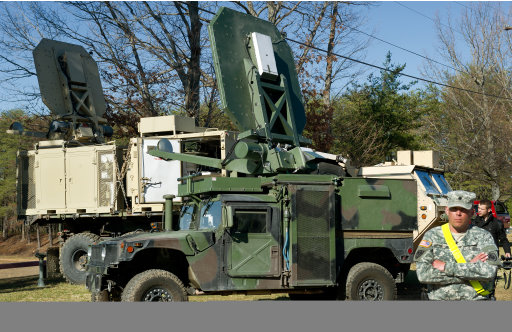
Upon first thought, I did what just about any other reader would do. Cool! I thought to myself. What a neat piece of weaponry!
However, on second thought, I became far less enthusiastic. I began thinking of the implications of something so powerful - so mighty, that the press of a button could send thousands of people fleeing from something they couldn't even see, smell, or hear.
In the same way that I was concerned when the US government authorized police units in the use of drones here at home (as you can read about here), I don't feel comfortable with anybody being in possession of a weapon like this. What does it mean for a society when the ruling class has almost every weapon conceivable at their disposal? Why are we so willing to defend the further development of weapons like these, never once suspecting they could be used against Americans themselves?
I feel that as a society, we have lost our way in the sense that when it comes to the military industrial complex (remember from our discussion in class?), Americans are unwilling to question government. It seems as if every year the United States blows hundreds of billions of dollars on bigger and better military equipment, but at what cost? Does anybody really believe that we're going to need these things? We already spend more on the military than all of the other countries put together. Is there anybody out there who actually poses such a serious threat to the United States?
In my research of this matter, I watched this video of President Eisenhower warning the American people about the military industrial complex in his farewell address. As he so eloquently stated. "We must guard against the acquisition of unwarranted influence, whether sought or unsought, by the military industrial complex.The potential for the disastrous rise of misplaced power exists, and will persist. We must never let the weight of this combination endanger our liberties or democratic processes." The president himself acknowledged the potential for "misplaced power" - quite possibly the lobbying power that we see today from massive US military contractors. The exact kind of lobbying power that was most likely responsible for the building of this heat ray weapon.
In my research of this matter, I watched this video of President Eisenhower warning the American people about the military industrial complex in his farewell address. As he so eloquently stated. "We must guard against the acquisition of unwarranted influence, whether sought or unsought, by the military industrial complex.The potential for the disastrous rise of misplaced power exists, and will persist. We must never let the weight of this combination endanger our liberties or democratic processes." The president himself acknowledged the potential for "misplaced power" - quite possibly the lobbying power that we see today from massive US military contractors. The exact kind of lobbying power that was most likely responsible for the building of this heat ray weapon.
If you ask me, I say we must take Eisenhower's advice and begin to question the military industrial complex once and for all. And that means that even if the government tries convincing you that some gizmo will only be used against your enemies, you remain suspicious and questioning. It's time to get the United States military machine under control.
What do you think? In the midst of our tremendous debt, should the government still be financing military projects like these?
Sunday, March 4, 2012
TV Tokenism: Alcatraz

"Alcatraz" seems to have an incredibly small amount of diversity in its cast. Except for Doctor Lucille, all of the actors are white, and the vast majority are men. Generally, I believe that this show does fit the criteria for TV tokenism. The main character, Rebecca Madsen (center), is always the center of the storyline, complex, white, and receives the bulk of the screen time. She has several supporting characters, like Dr. Soto (center left), Emerson Hauser (center right), and the European, female doctor, Doctor Lucille (far right). After getting shot in the beginning episodes, Lucille hasn't played any serious role, but she had previously been in the "buddy" position and participated in the subplots. The one area where this show diverges from the framework of TV Tokenism is that Doctor Lucille actually has a fairly complicated role with a significant amount of mystery surrounding her past.
Answer to Jon S. Post on "Acceptance Without Justification"
Jon - I find it very ironic how in your argument for the need of societal focus, you bring up how people shouldn't be allowed to steal from one another. You just proved my point. The purpose of government is to prevent individuals from taking away each other's rights. As you said yourself, the same concept applies to economics. This means that the government should be there to prevent theft, and as I showed in my previous comment, wealth redistribution is a forceful transfer of wealth, or in other words, theft.
The big problem that I constantly see in progressives is that they equate our current system with free market capitalism. Especially in healthcare, nothing could be further from the truth. Our healthcare system resembles corporatism, with government intervention all over the place. The biggest reason for the high costs is that due to tax incentives, health insurance is purchased through businesses, and due to this third party payment system (which is barreled with regulation after regulation), there is very little incentive for cost reduction by doctors, hospitals, clinics, etc. This is what causes high prices. I'd be happy to give you more information on this if you ask. But at the very least, you have to recognize that although we have a very flawed healthcare system, it isn't because of capitalism, and if you look at the healthcare systems in Canada and the European countries, you'll find that they're nothing to brag about. Typically, they have long waiting lines, rationing, mediocre quality of care, and high taxes.
For the record, I don't believe in public schools. An excellent case can be made for this, and the fact that you pointed to the poor quality of education in other areas in America is indicative of what I'm saying - government involvement in schools hasn't worked, and throwing more dollars at a failed endeavor certainly won't make the problem go away. Keep in mind that the Department of Education has been steadily getting more and more money over the years, and there hasn't been any progress - just more mandates and regulations in a top-down system that clearly doesn't work.
Once again, for the record, I don't like Mitt Romney.
In a capitalist system, EVERYBODY benefits. I've explained it in depth already, and although I know that you love saying things like "the ones that survive are the ones with the most money", you haven't addressed my argument one bit. Please, stop repeating progressive slogans and tell me HOW only rich people benefit under capitalism. The collapse of 2008 is not a valid example of free market failure - when you've got artificially low interest rates from the Federal Reserve coupled with affirmative action programs, tax incentives, and programs for easy loans, you can't blame the free market. Keep in mind that it were the Austrian Economists who saw the crash coming from a mile away. I've told you my theoretical argument and my empirical evidence for this, now I challenge you to do the same.
When the founding fathers warned us of mob rule, you're right, they warned us against rules that could be instated to favor classes. That means that if the 99% says it's OK to take everything from the 1%, they shouldn't be allowed to do it. That's what the founders warned us about, and that's why they made this country a republic - to prevent the exact kind of action that you are advocating for.
It's a good thing that the private sector wants to make money. They have the profit incentive that the government doesn't. That means that if they aren't able to attract workers through decent wages and working conditions and coordinate their resources effectively, they go out of business. That's what drives businesses to create cheap products and pay their workers based on their productive capacity.
What's really fictitious is that only government can create the technology necessary for the private sector to work. What evidence do you have that ONLY government can accomplish this? I understand that the government has played a role in aiding the private sector, but the free market would be able to accomplish that remarkably, and with better results (remember the profit incentive?).
What I find absurd is that even though I showed how the poverty rate has stagnated since the introduction of the War on Poverty, you're advocating for more of the same! Keep in mind:
"Insanity is doing the same thing over and over again and expecting a different result."
-Albert Einstein
Now, I never made the claim that the Great Depression was an example of the free market in action. The ABSENCE of the free market is what prolonged it for over fifteen years. Interesting how every time I bring up the Federal Reserve, you never address it! Blaming depressions on greed is like blaming airplane crashes on gravity. But when you've got the Federal Reserve flooding the financial system with credit, is it any surprise that malinvestment occurs? Please, if you're going to claim that all recessions/depressions are caused by unregulated greed, explain to me how the Federal Reserve is not responsible when it's creating money out of thin air and flooding the economy with credit.
At the very least, I'm glad you acknowledged that taxes are theft. The problem is that theft is wrong. And maybe if you did a little more research on the free market and took a look at Austrian Economics, you'd realize that the absurd amount of taxes we have today are not necessary and frankly, destructive to a free society.
Friday, March 2, 2012
TV Tokenism: It's Here, But What Should We Do About It?
Following our recent classroom discussions on TV Tokenism, I've become convinced: it definitely exists. In fact, not only does it exist, but it has penetrated so far into the root of our society that I'd be amazed if anything changed on this front in the coming years. But as I think about it, the question arises: now that we know, what should be done about it?

To answer the question in one word, nothing. I mean, at least at the government level.
Since the founding of this country, our society has been built upon freedom. That means we have the freedom to eat what we want. And the freedom to talk as we want. And along with that, it means that as a society, we have a right to create whatever TV shows we may want. Sure, the main reason for TV Tokenism is the incentive to make money, and most show do in fact perpetrate TV Tokenism. But there will always certain shows that are intentionally created to appeal to the minorities. And if we want to live in a free society, we have to learn to embrace other people's freedom to make TV shows as they please.
If we do want to create a change in the system though, there is nothing wrong with boycotting certain shows, spreading the word, writing letters, emails, etc. The main reason why people perpetrate TV Tokenism is because they think that it will earn them the most amount of money. But if we show them otherwise, trust me: they will make a change. If enough people put in the effort and protest TV Tokenism, I have no doubt that we will be successful.
What do you think? Should anything be done on the government front or not?
Answer to Jon's Blog Post, "Acceptance Without Justification"
Note: this comment turned out to be too long for the comment section, so I decided to make it a post. This might not be very interesting to most people out there, but in the midst of so much capitalism bashing I decided to present the other side.
Here it is.
Jon - it seems as if you place emphasis on the value of society as opposed to the value of individual people. My question is, are you willing to sacrifice the natural rights of the people living within the society for your cause? Because that's exactly what you're proposing with wealth redistribution, where the government extracts money from certain individuals through the use of force and gives it to others. See, if an armed man came to your house, put a gun to your head, and took your money, that would be wrong. But what makes it morally justified when the government does it? Remember, this is what the founders warned us about in a democracy - it is often nothing more than mob rule.
Also, you don't think people in the private sector work for a common goal? Just take a look at some of the incredible entrepreneurship that we have witnessed in our society. In some cases, literally millions of people work for the common goal. The only difference is that the private sector has a profit incentive, which in turn causes them to create the best product for the cheapest price, while politicians will sell their soul just to get re-elected into office again and again.
I find your assumption astonishing that under a free market system people would be paid five cents an hour. In that case, why isn't everybody paid the minimum wage right now? What's stopping employers? There's a reason they don't do that. I don't want to get too technical but it makes perfect sense - if an employer pays an employee below what they deserve based on their productive capacity, the employees will flock some other place where they are valued according to their productive capacity. In other words, wage competition occurs.
To give you an example of how the free market benefits everybody, look around. Two hundred years ago, poor people faced a very short life expectancy, starvation, backbreaking labor, poor transportation, poor housing, etc. On the other hand, rich people worked little, had servants, and led a more luxurious lifestyle. Nobody had adequate transportation. Now, the difference between a poor person and a rich person is that a poor person has a beat up car, while a rich person has a new BMW. But they both have cars! Although wealth disparity exists, EVERYONE has become wealthier and enjoys a higher standard of living.
About the 1900s, you're right (and I did acknowledge this with the word "virtually") - there was a small amount of poorly funded programs. To be honest, I don't know the exact specifics. But remember, the War on Poverty began in the mid-late 1960s along with massive, leviathan programs like medicaid. Is it really just a coincidence that since these enormous government programs were put into place, the poverty rate has stagnated? Hardly.
Now, in terms of the New Deal, I always find it laughable when people bring it up as an example of exceptional government action. Remember, the Great Depression lasted for a whopping 15+ years (not officially, but I can give you further evidence of this if you'd like). Have you ever heard of the depression in 1920? That's because although the GDP plummeted and the economy was headed for the doldrums, government did nothing, and the free market fixed itself.
Here it is.
Jon - it seems as if you place emphasis on the value of society as opposed to the value of individual people. My question is, are you willing to sacrifice the natural rights of the people living within the society for your cause? Because that's exactly what you're proposing with wealth redistribution, where the government extracts money from certain individuals through the use of force and gives it to others. See, if an armed man came to your house, put a gun to your head, and took your money, that would be wrong. But what makes it morally justified when the government does it? Remember, this is what the founders warned us about in a democracy - it is often nothing more than mob rule.
Also, you don't think people in the private sector work for a common goal? Just take a look at some of the incredible entrepreneurship that we have witnessed in our society. In some cases, literally millions of people work for the common goal. The only difference is that the private sector has a profit incentive, which in turn causes them to create the best product for the cheapest price, while politicians will sell their soul just to get re-elected into office again and again.
I find your assumption astonishing that under a free market system people would be paid five cents an hour. In that case, why isn't everybody paid the minimum wage right now? What's stopping employers? There's a reason they don't do that. I don't want to get too technical but it makes perfect sense - if an employer pays an employee below what they deserve based on their productive capacity, the employees will flock some other place where they are valued according to their productive capacity. In other words, wage competition occurs.
To give you an example of how the free market benefits everybody, look around. Two hundred years ago, poor people faced a very short life expectancy, starvation, backbreaking labor, poor transportation, poor housing, etc. On the other hand, rich people worked little, had servants, and led a more luxurious lifestyle. Nobody had adequate transportation. Now, the difference between a poor person and a rich person is that a poor person has a beat up car, while a rich person has a new BMW. But they both have cars! Although wealth disparity exists, EVERYONE has become wealthier and enjoys a higher standard of living.
About the 1900s, you're right (and I did acknowledge this with the word "virtually") - there was a small amount of poorly funded programs. To be honest, I don't know the exact specifics. But remember, the War on Poverty began in the mid-late 1960s along with massive, leviathan programs like medicaid. Is it really just a coincidence that since these enormous government programs were put into place, the poverty rate has stagnated? Hardly.
Now, in terms of the New Deal, I always find it laughable when people bring it up as an example of exceptional government action. Remember, the Great Depression lasted for a whopping 15+ years (not officially, but I can give you further evidence of this if you'd like). Have you ever heard of the depression in 1920? That's because although the GDP plummeted and the economy was headed for the doldrums, government did nothing, and the free market fixed itself.
Thursday, March 1, 2012
TV Tokenism: Alcatraz
"Alcatraz" seems to have an incredibly small amount of diversity in its cast. Except for Doctor Lucille, all of the actors are white, and the vast majority are men. Generally, I believe that this show does fit the criteria for TV tokenism. The main character, Rebecca Madsen (center), is always the center of the storyline, complex, white, and receives the bulk of the screen time. She has several supporting characters, like Dr. Soto (center left), Emerson Hauser (center right), and the European, female doctor, Doctor Lucille (far right). After getting shot in the beginning episodes, Lucille hasn't played any serious role, but she had previously been in the "buddy" position and participated in the subplots. The one area where this show diverges from the framework of TV Tokenism is that Doctor Lucille actually has a fairly complicated role with a significant amount of mystery surrounding her past.
Monday, February 20, 2012
Foxconn: Presenting the Other Side
While sifting through the news today I stumbled across an article detailing a reporter's experience inside Foxconn, the most notorious manufacturer for Apple, and considering our recent discussions in class about the matter I took a close look (you can read it here). Now, as much as I know of the arguments surrounding the horrors of the working conditions there, I thought I'd present the other side of the story.

One of the first things that struck me was the statistic that the article brought up concerning suicides in the factories. As it turns out, of the roughly 235,000 employees at Foxconn, only 18 committed or attempted to commit suicide. If you think about it, this is actually quite staggering. As unfortunate as those deaths may be, the suicide rate at Foxconn is significantly lower than the average suicide rate in China. In other words, suicides are very rare. And if you think about it, suicide nets aren't the worst of ideas - at the very least they prevent people from making impulsive, rash decisions.
Secondly, I'd like to take another unconventional position regarding child labor. As horrid and grotesque as child labor may seem superficially, consider the circumstances under which many people in China are forced to live in. For many families, there is relatively little money for even the basic necessities, and having kids work at young ages is the only way for them to survive. I would rather have children working than starving, and although I'd rather see them learning in school, the living conditions for many people in China simply don't allow for it.
Finally, I'd just like to address these working conditions from a general perspective. Apple, like all companies, wants to make a profit. But I think what gets ignored is that there IS an incentive for them to keep their workers safe. It's never fun for a company to hire new workers, and often, during the process, money is wasted in an effort to employ somebody else. Although accidents do occur every now and then, Apple does try to keep workers from getting injured - it's just not financially sound. So I have a feeling that the extent of injuries on the job has been overblown; I mean, if injuries were really that routine, why would anyone want to work there?
What are your thoughts? Do I have any legitimate points?
One of the first things that struck me was the statistic that the article brought up concerning suicides in the factories. As it turns out, of the roughly 235,000 employees at Foxconn, only 18 committed or attempted to commit suicide. If you think about it, this is actually quite staggering. As unfortunate as those deaths may be, the suicide rate at Foxconn is significantly lower than the average suicide rate in China. In other words, suicides are very rare. And if you think about it, suicide nets aren't the worst of ideas - at the very least they prevent people from making impulsive, rash decisions.
Secondly, I'd like to take another unconventional position regarding child labor. As horrid and grotesque as child labor may seem superficially, consider the circumstances under which many people in China are forced to live in. For many families, there is relatively little money for even the basic necessities, and having kids work at young ages is the only way for them to survive. I would rather have children working than starving, and although I'd rather see them learning in school, the living conditions for many people in China simply don't allow for it.
Finally, I'd just like to address these working conditions from a general perspective. Apple, like all companies, wants to make a profit. But I think what gets ignored is that there IS an incentive for them to keep their workers safe. It's never fun for a company to hire new workers, and often, during the process, money is wasted in an effort to employ somebody else. Although accidents do occur every now and then, Apple does try to keep workers from getting injured - it's just not financially sound. So I have a feeling that the extent of injuries on the job has been overblown; I mean, if injuries were really that routine, why would anyone want to work there?
What are your thoughts? Do I have any legitimate points?
Sunday, February 5, 2012
The Superbowl: Why Are People so Obsessed?
It seems like once again, the Superbowl has taken the American public by storm, and a new record number of viewers has been announced: 111 million. That's about 20 million more people than those who voted in the 2010 elections, and only slightly less than the number of people who voted in 2008. Again, for the seventh or so year in a row, I find myself dumbfounded.

What is it about throwing a weird-shaped ball back and forth and tackling people that makes over a hundred million people turn on their TVs and gaze at the colorful screen? I've never understood it. Maybe it's because I come from a tennis background, but even there, I don't understand the fascination of watching people hit a fuzzy yellow ball over and over again.
The way I see it, people can do whatever they want in their free time - I honestly couldn't care less. But when it gets to the point when people care more about a football game than a potentially imminent war with Iran, I get a little bit worried.
Just recently, I came across a Youtube video that made almost made my hair spike up (if I hadn't been laughing/crying so much at the same time). Take a quick look.
So, we have kids who can't think of a country that begins with the letter U, and yet the seemingly brain dead public (sorry for the harsh language) continues to drown out its surroundings with footage of people throwing a ball and running around in circles. If there isn't something absurd about that I don't know what is,
America is now over 15 trillion dollars in debt, a number that actually surpasses our GDP. Nothing is being done about it. Unfortunately, if the ignorance continues at this rate, our country might just wake up one morning to a harsh reality.
But don't worry! Just so long as John and Bill get to eat chips, drink some beer, and watch the game, we"ll be OK, right?
That certainly seems to be the mindset these days. What are you're thoughts on the Superbowl? Are the American people smarter than I make them out to be?
Friday, January 13, 2012
The Meta Post: Reflections
Looking back at the blog posts I've done this semester, nothing jumps out more than my obvious fascination with politics and significant events going on in the world. Of my 15 blog posts, the vast majority consisted of content pertaining to the presidential race, American foreign policy, and the economy, on top of other current events. It's clear that I take a deep interest in these issues, and as I worked my way into the first semster, my posts went through a general trend of becoming more focused, more open-ended, and more pertinant to the issues facing America today.
Consider my very first blog post, which can be viewed here. Although at the time I had been proud of my work and the effort I put into explaining my opinion on economics, it's clear that I got way too technical, especially for a blog starter. And after finishing the blog post, it would seem that the reader would not be left thinking. Although I posed a question at the bottom, asking, "Would an economy really benefit if we had people digging holes in the ground just for the sake of employment?", it was way too directed, and the reader would most likely walk away more or less empty-minded. Instead, a broader, more open ended question would have done the trick, such as, "Is the amount of employment an accurate measurement for the state of an economy?" A question like this would have offered the reader more room to think. But as a whole, my first attempt wasn't in vain, and I continued to progress during the year.
A few weeks later, I wrote another blog post, which can be viewed here. In this post, I made an attempt at avoiding political issues, and instead sticking to a clear, American topic that would leave the reader thinking. I think my mission was accomplished; I anylized the American tradition of hard work and left the reader with what I consider to be a reletively thoughtful and provacative question: "Have Americans become too preoccupied with succeeding that we have forgotten the ultimate goal of happiness?" In comparison with my first post, I took on a more American related theme, and in the process I even found myself doubting the necessity of this work-aholic American tradition.
But finally, my blog posts progressed to a point where I was able write about issues that interested me without shoving it down the throat of the reader. Consider the blog post in which I addressed Mr. O'Conner's claim that poor people live under a form of slavery. Even though I took an opposing stance, I did so much more respectively, leaving room for the reader to arrive at his/her own conclusions even after hearing my stance. Unlike my very first blog post about the economy (mentioned above), I guided the reader through my reasoning, instead of just telling him/her the way it is. I did this by breaking up my points into three main parts, and following a train of thought which kept the reader fascinated (I hope) but not overwhelmed. The final question was also a powerful one, where I asked the reader to consider the ultimate question: are poor people essentially slaves?
In retrospect of my work, I'm pleasantly surprised at what I've been able to accomplish. I was able to stick to the issues that interested me while at the same time keeping my questions open ended and leaving room for disagreement with the reader. Although I'm often tempted to ram my opinions down people's throats, I found a way to lay down my opinions while being respectful and acknowledging the possibility of disagreement. These changes have allowed my writing to become less provocative, while holding on to my values and maintaining my convictions. I still haven't been able to do this perfectly, but I hope my general trend of improvement will continue throughout the year and my writing will continue to become more concise, pertinent, and above all, thoughtful.,
Consider my very first blog post, which can be viewed here. Although at the time I had been proud of my work and the effort I put into explaining my opinion on economics, it's clear that I got way too technical, especially for a blog starter. And after finishing the blog post, it would seem that the reader would not be left thinking. Although I posed a question at the bottom, asking, "Would an economy really benefit if we had people digging holes in the ground just for the sake of employment?", it was way too directed, and the reader would most likely walk away more or less empty-minded. Instead, a broader, more open ended question would have done the trick, such as, "Is the amount of employment an accurate measurement for the state of an economy?" A question like this would have offered the reader more room to think. But as a whole, my first attempt wasn't in vain, and I continued to progress during the year.
A few weeks later, I wrote another blog post, which can be viewed here. In this post, I made an attempt at avoiding political issues, and instead sticking to a clear, American topic that would leave the reader thinking. I think my mission was accomplished; I anylized the American tradition of hard work and left the reader with what I consider to be a reletively thoughtful and provacative question: "Have Americans become too preoccupied with succeeding that we have forgotten the ultimate goal of happiness?" In comparison with my first post, I took on a more American related theme, and in the process I even found myself doubting the necessity of this work-aholic American tradition.
But finally, my blog posts progressed to a point where I was able write about issues that interested me without shoving it down the throat of the reader. Consider the blog post in which I addressed Mr. O'Conner's claim that poor people live under a form of slavery. Even though I took an opposing stance, I did so much more respectively, leaving room for the reader to arrive at his/her own conclusions even after hearing my stance. Unlike my very first blog post about the economy (mentioned above), I guided the reader through my reasoning, instead of just telling him/her the way it is. I did this by breaking up my points into three main parts, and following a train of thought which kept the reader fascinated (I hope) but not overwhelmed. The final question was also a powerful one, where I asked the reader to consider the ultimate question: are poor people essentially slaves?
In retrospect of my work, I'm pleasantly surprised at what I've been able to accomplish. I was able to stick to the issues that interested me while at the same time keeping my questions open ended and leaving room for disagreement with the reader. Although I'm often tempted to ram my opinions down people's throats, I found a way to lay down my opinions while being respectful and acknowledging the possibility of disagreement. These changes have allowed my writing to become less provocative, while holding on to my values and maintaining my convictions. I still haven't been able to do this perfectly, but I hope my general trend of improvement will continue throughout the year and my writing will continue to become more concise, pertinent, and above all, thoughtful.,
Sunday, January 8, 2012
Sensible Media Reporting - Can We Actually Get Some?
A few days ago Mr. Bolos and Mr. O'Connor led a particularly interesting discussion about the media, and its role during the election process. Maybe I don't have a life but I've been following the election process quite closely, rooting for somebody I won't mention in this post. But what struck me as odd was the indecisiveness of the American people in choosing the republican nominee, and even more so the hysterical reaction by the media that accompanied this indecisiveness.
First it began with Michele Bachmann. After she won the Iowa Straw Poll and did well in a certain debate, she seemed unstoppable. To everyone's surprise, her poll numbers skyrocketed and the media hysteria began, with headlines about the unstoppable Bachmann surge all over the place. Then, Rick Perry entered the field with very high poll numbers, only to come crashing down once people realized his debating skills were a little below average, to say the least. Once again, this incident was accompanied with media hysteria left and right - one second proclaiming the election already essentially over and the next pronouncing Perry's campaign, well, dead.

First it began with Michele Bachmann. After she won the Iowa Straw Poll and did well in a certain debate, she seemed unstoppable. To everyone's surprise, her poll numbers skyrocketed and the media hysteria began, with headlines about the unstoppable Bachmann surge all over the place. Then, Rick Perry entered the field with very high poll numbers, only to come crashing down once people realized his debating skills were a little below average, to say the least. Once again, this incident was accompanied with media hysteria left and right - one second proclaiming the election already essentially over and the next pronouncing Perry's campaign, well, dead.
Then came Herman Cain, who must have said the number 9 more than anybody else alive in that time period. In fact, to the questions where he couldn't think of a proper response, he resorted to the one answer he could always count on: 999. The media dubbed his serge in the polls and his overall support as the "Cain-Train", and everybody knew that if you didn't support the black guy saying 999 over and over again you were living on the moon. Following the "Cain-Train", came Newt Gingrich, who the media was sure would be the final nominee. But to everyone's "surprise", Gingrich fell just like everybody else, even though people in the media had once again been labeling Gingrich as the unstoppable force in the race.
Finally came the surge of Rick Santorum - but don't even get me started on him.
So what does this tell us? Are people really that unsure of their political views that they hopped around from candidate to candidate, coincidentally at the same time? Or was there an unnoticed media force propelling one candidate to the front of the pack after another? Take a look at an article (here) written at the start of Santorum's "surge". As soon as he barely hit third place, the media started beating on its drums and telling everybody that Santorum was somehow making an enormous move (even though it wan't even that big). The article wrote that Santorum had "leapfrogged", and described his campaign as "surging". To nobody's surprise, Santorum picked up another 9% in the time leading up to the Iowa caucuses, with everybody under the impression that he was somehow the true conservative that they had been looking for all along.
In my opinion, these surges happen only because of the media. True, polls do change, and some candidates pick up steam every once in a while. But without the media telling people what to think and why they should jump on the bandwagon, I think poll number would change much more subtly. What do you think?
Subscribe to:
Posts (Atom)