Sunday, May 6, 2012

Gateways in American Society

After reading Betsy's post on the ACT, and the way in which it acts as a gateway to top notch colleges for those getting testing accommodations, I wanted to talk about my opinion on the matter. I too believe that our society is based on this gateway system. As I mentioned on Betsy's blog, I constantly see students doing social service for the sole intent of having a nice looking resume. And as I also mentioned, finding a job these days has largely become dependent on your ability to garner connections and use them for special treatment. However, I'd like to talk about where I believe this gateway system exhibits itself the most in American society.


For those of you that have read at least a few of my blog posts, I'm sure you're aware of my belief that most of our problems stem from the government. Well, this blog post will be no different. Because once again, I'd like to blame the federal government for the gateway system in which we find ourselves today.

As I have discussed in previous blog posts (based off class discussions), the military industrial complex is a huge leech on the economy. At the same time that we have businesses producing, innovating, and expanding according to the wants and needs of consumers, we have an industry that gets nearly a trillion dollars from the feds each year so that American troops can remain stationed all across the globe. Remember, this is money that was taken from the productive sector of the economy, and given to the people that were able to give the politicians the biggest donations. Talk about a gateway! That's nearly a trillion dollars down the drain every year to the most destructive sector of the economy (pun intended). Because of the government, defense contractors are able to grow richer and richer as the average American gets poorer.

In addition, consider what happened in the wake of the housing bubble. As the stock market began to tumble, the federal government almost immediately began passing one stimulus (bailout) after another. Now, you might try to tell yourself that the government actually had the people's best interests at heart. But let's take a look at the donations then-senator Obama received (here). If you look closely, you'll find that some of his biggest contributors include big banks. Morgan Stanley. Chase. Goldman Sachs. Citigroup. IBM. And the list goes on. Is it just a coincidence that many of these are the same banks that got bailed out? I think you'll notice the same pattern with corporations. Is this not a gateway? Isn't this exactly the kind of gateway system American's have gotten so increasingly sick of?

But this sort of behavior can be seen from the federal government on almost all levels. With so much money to dole out, you're always going to have people making secret deals, getting paid, and leaving rich. And not just rich. Rich with same dollars that were taxed away from the average American Joe. And this is the biggest gateway of them all. This is why I would argue we currently see a national debt of fifteen trillion dollars, with no end in sight. And this is what has spurred both the Tea Party an the Occupy movements. Although the two may appear to be complete opposites of one another, I think both movements are sick and tired of the same thing.

What do you think? Is the  US government just a massive gateway system, as I argue?


Sunday, April 29, 2012

Junior Theme: A Look Back

So now that I'm essentially done with Junior Theme, I thought I'd write a blog post documenting some of the things I took away from the experience. For simplicity purposes, I'll arrange them in a list so each point can be clearly distinguishable.


1. The real challenge behind the Junior Theme isn't what most people would think it is. It has to do with the way research is incorporated, or synthesized into the paper. For me, the research process went along great - with databases like JSTOR and proquest, and a library entirely full of books, I was able to find all the information I needed to satisfy the four arguments that compose my thesis. The real challenge was incorporating them all simultaneously. With so many sources, as soon as I read one, I forgot one of the old ones. And not only that, but I had to find the exact parts from each source that worked with one another and find a way to fluidly insert them into my paper. Once I did that, the writing/editing process was significantly easier.

2. The interview is very important. What happened with me was that after I had gathered all of my sources together, I still had a few areas that were unclear to me. Sometimes, it was just a discrepancy in the information, but other times I couldn't think of the missing link that connected one point to another. This is where the interview comes in. With the interview, I was able to formulate the questions myself, meaning I was able to ask questions that would fill in the dots where I needed it. Especially if the person you are interviewing is knowledgeable, he/she can be an enormous help in giving you the missing link or just suggestions for where to go with your paper. After my interview, I began to approach my paper completely differently, because he placed more emphasis and credibility on some areas than others, which steered me in the right direction.

3. And finally, I learned that getting my ideas on paper and formulating a rough draft is incredibly important. Usually when I write essays, I take forever to write the rough draft, and then I hardly make any changes for the final draft. This is what I started out doing in my paper, and for the first 3 and a half paragraphs I must have spent 6-7 hours. Fortunately, with the rough draft deadline approaching so quickly, I was forced to sit down and finish my paper in a relatively short amount of time. Instead of focusing on the details, I focused on the big picture ideas, my arguments, and how they related back to my thesis. As I was looking over it the next day, I realized how glad I was that I had finished the hard part. In my mind, editing is easier than writing from scratch, so it was a huge relief to get to the final stages of my paper.

What do you think? Did you come across any of the same ideas that I did while writing your paper?


Thursday, April 19, 2012

The Real Problem Behind Education

Thanks to Mr. O'Connor's suggestion, I was finally able to interview Peter Smagorinsky, a professor from the University of Georgia, after school today. First of all, I'd like to mention how incredibly knowledgeable he is, and although I know he really wanted to share his personal opinion on education with me, he was very kind in answering my questions head on. But in addition to praising his expertise, I realized something new today during our interview.


See, the main question I was getting at was this: why do politicians constantly express support for more federal involvement in the education system? Prior to the interview, I had considered two possible answers to this question. Here they are:

1) Politicians just go along with the party platform. As both the republicans and democrats have demonstrated, neither of them want to reduce federal influence in education. Instead of thinking for themselves, they just blindly follow the likes of John Boehner, Obama, and Harry Reid. 

2) It is politically expedient to do so. A politician could give a speech to a giant crowd and assure them that he or she would make education a federal priority to a standing ovation. "It's for your children! A vote for the other guy means a vote for crumbling schools!" 

After talking to Professor Smagorinsky however, he let me in on a little secret - the most obvious answer is usually the right one. He suggested that it's likely that politicians are just clueless. Sure, they might have good intentions, but in the end, they try to make a difference, and they just don't realize what they're doing.

This also reflects the nature of government. Isn't it interesting how people just assume that our fellow public servants in Washington know what they're doing? And what if they don't? Many of the congressman and women haven't been in a school for twenty years! What makes the American people think that they understand the problems facing schools today? What makes the people think that they understand any of the problems facing Americans today? These people are just like you and me. And we're supposed to believe that they understand the root cause of declining test scores?

Once again, I'd like to thank Mr. Smagorinsky for the comprehensive interview. And I'll let you in on a little secret - he wants to get rid of the Department of Education altogether!


Sunday, April 15, 2012

Government Growth and Fear

As I was doing research for my Junior Theme, I came across some information that I found to be pretty interesting. The simple fact of the matter is, the federal government set the precedent for its involvement in education by creating a narrative based on fear. I can't say that I'm really surprised, as this is the way it's been going for decades now, but not only does it give me a good chance to discuss the history behind my topic, it provides the perfect bridge into a land I like to call, White Noise!


So after the Soviets launched Sputnik I in 1957, the American government became concerned with falling behind in science, math, and technology. Congress then passed the National Defense Education Act, which authorized the National Science Foundation to grant $500 million dollars to curriculum and teacher professional development over the next twenty years. Not only did schools receive money, but the NSA began playing a part in dictating the curriculum. Note that this was completely unprecedented - never before had the federal government made such a prolonged commitment to schools. And also note that this development occurred as soon as the fear propaganda began rolling. Boom! As soon as Americans experienced their first dose of fear, they coalesced and stood behind the consequential actions of the government.


Now, the reason I find this interesting (as I always do) is because there's is an incredibly close correlation between fear and government growth. Take the PATRIOT Act for example. Or the stimulus package. Or even the United Nations for crying out loud. They were all created out of fear, and that's the truth. It's a very clear pattern here, and there's no use denying it. Even many of the things people like today were originally started because of fear.


As I was thinking about all this I began to realize the profound role that fear played in this novel called White Noise. On page 117, shortly after the airborne toxic event had struck, the reader is told that the siren was saying four words over and over again: "toxic event, chemical cloud". If you look closely at the exact language that was used, you'll notice it was intentionally chosen to instill fear in the public. Anybody who hears the word "toxic" or "chemical" gets scared immediately. And this is a perfect example of how government operates. Granted, the situation in White Noise might be more appropriate in the midst of a disaster, but the point remains true - government uses fear to progress its agenda. The more frightening the words the better. If you ever wonder why you hear so much fear mongering coming out of Washington, this is why.


What do you think? Is it appropriate for the government to use fear to get legislation passed or take some sort of unprecedented action?


Sunday, April 8, 2012

Education: The Truth Behind The Numbers

In my research of the American educational system and federal involvement in it over the years, I came across a number that I found to be striking. In the midst of all the fuss about federal involvement in education, the truth is that federal spending only accounts for a mere 10% of all spending related to education.


Now, the reason I find this so interesting is because although every election cycle Americans are subjected to the same debate concerning education, the actual involvement is almost minuscule. Of course, this doesn't mean that the federal government doesn't play a role in other ways - obviously, schools are forced to comply with certain laws and standards mandated from up top. But at the same time,  the constant cry that the feds are taking over education is way overblown. Although federal involvement has increased dramatically, state and local involvement has increased as well, causing the percentage to rise but not very fast.

Although I could spill out information on a host a different issues regarding federal involvement in education, I thought I'd keep this post short and to the point. To sum it up:

Federal involvement in education has grown significantly since the 1960s, but it's still only at 10%. Why do you think so many people try to paint the picture as if the feds are taking some sort of enormous unprecedented role in education?

Sunday, March 18, 2012

Working Conditions in the Industrial Revolution


When somebody utters the words, "Industrial Revolution", these are the types of images that people tend to conjure up. Young, poor, helpless kids wearing rags and working for hours upon hours for mere pennies a day. With almost no breaks. Bad food. Stuffy. Depressing. Hot. Cold. Whatever. No matter what the exact image is, I think we can agree on this: it's generally not a good one.

To be honest, this is my very first post on the junior theme, and I haven't done anything more than glance at a few pages of a book I checked out at the library. But before we embark on this exciting expedition through the nineteenth century together, I'd like to make a note on one thing.

As I mentioned in the first paragraph, people automatically get the impression that the Industrial Revolution was all bad. But as I was sitting here and thinking about it myself, I realized one crucial piece of information: the transition from agriculture-based jobs to manufacturing plants and factories was made completely and absolutely voluntarily. In other words, people chose a lifestyle of tedious, factory labor on their own. Had they wanted to, they could have kept things as they were. And they didn't.

The only reason I'm putting that out there is because I feel like people tend to accept the faulty notion that people were sitting in circles singing kumbaya all day long before the 1800s, and then as soon as the evil, selfish entrepreneurs arrived, everything went bad. Well, let me tell you, no matter how you feel about what transpired during the 1800s, it simply didn't happen that way. In fact, people were very poor beforehand. Starvation was a very real threat at the time. And some would argue that the voluntary shift into the Industrial Revolution is what got us through those horrific times when people were always hungry. I'm not necessarily saying everything that occurred during that time was acceptable, but I'm just making the point that it was a voluntary transition that took people from a bad time through a journey to where we are today.

Well, those are some of my thoughts on the Industrial Revolution and the junior theme in general. Feel free to comment. What do you think?


Sunday, March 11, 2012

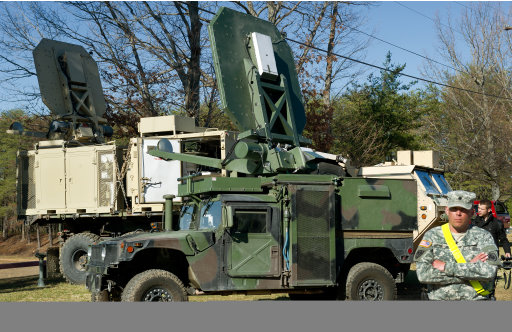
The Military's New Heat Ray Weapon: On Second Thought...

While sifting through the news today, I came across an article that I found to be particularly interesting. It detailed the US Military's new mass containment weapon that uses an electromagnetic beam that, although not harmful, causes people to get a fleeing reaction and run in the opposite direction.

Upon first thought, I did what just about any other reader would do. Cool! I thought to myself. What a neat piece of weaponry!


However, on second thought, I became far less enthusiastic. I began thinking of the implications of something so powerful - so mighty, that the press of a button could send thousands of people fleeing from something they couldn't even see, smell, or hear. 

In the same way that I was concerned when the US government authorized police units in the use of drones here at home (as you can read about here), I don't feel comfortable with anybody being in possession of a weapon like this. What does it mean for a society when the ruling class has almost every weapon conceivable at their disposal? Why are we so willing to defend the further development of weapons like these, never once suspecting they could be used against Americans themselves?

I feel that as a society, we have lost our way in the sense that when it comes to the military industrial complex (remember from our discussion in class?), Americans are unwilling to question government. It seems as if every year the United States blows hundreds of billions of dollars on bigger and better military equipment, but at what cost? Does anybody really believe that we're going to need these things? We already spend more on the military than all of the other countries put together. Is there anybody out there who actually poses such a serious threat to the United States?

In my research of this matter, I watched this video of President Eisenhower warning the American people about the military industrial complex in his farewell address. As he so eloquently stated. "We must guard against the acquisition of unwarranted influence, whether sought or unsought, by the military industrial complex.The potential for the disastrous rise of misplaced power exists, and will persist. We must never let the weight  of this combination endanger our liberties or democratic processes." The president himself acknowledged the potential for "misplaced power" - quite possibly the lobbying power that we see today from massive US military contractors. The exact kind of lobbying power that was most likely responsible for the building of this heat ray weapon.

If you ask me, I say we must take Eisenhower's advice and begin to question the military industrial complex once and for all. And that means that even if the government tries convincing you that some gizmo will only be used against your enemies, you remain suspicious and questioning. It's time to get the United States military machine under control.

What do you think? In the midst of our tremendous debt, should the government still be financing military projects like these?